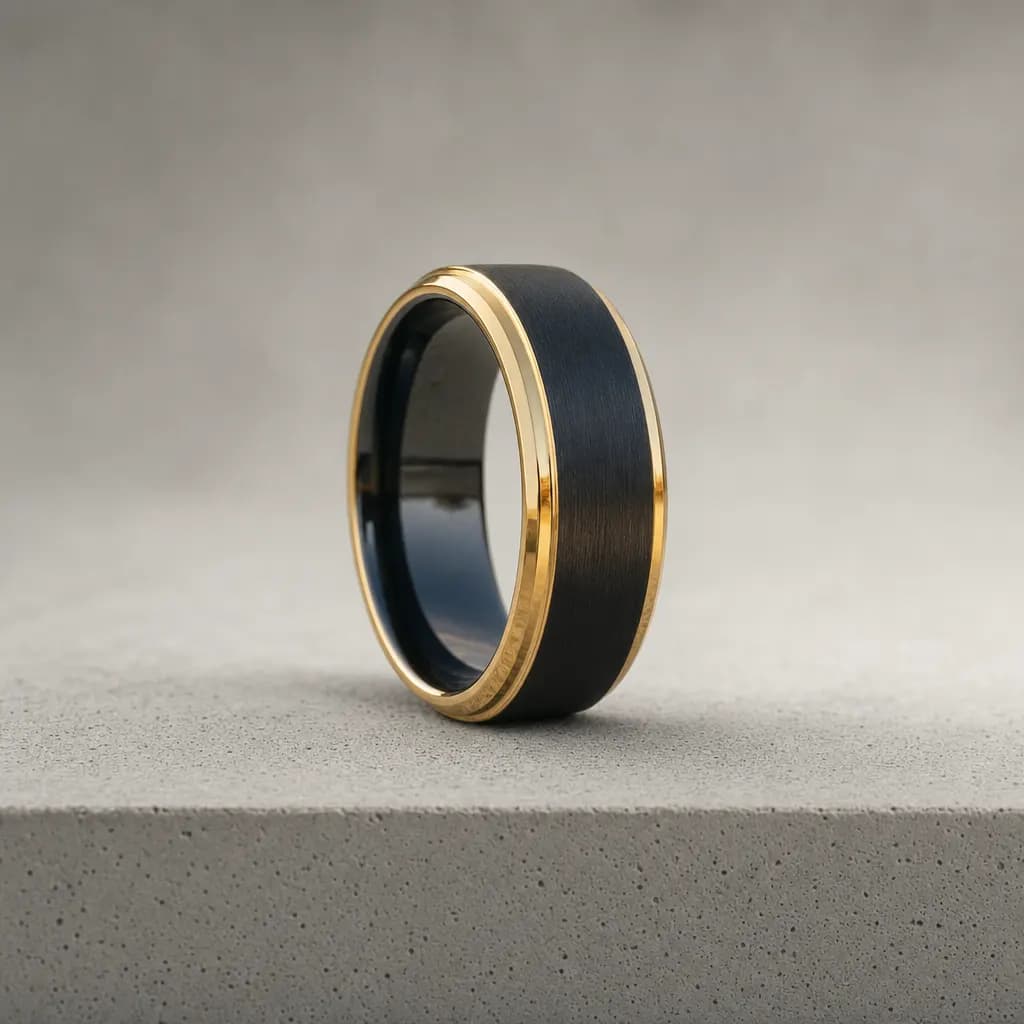
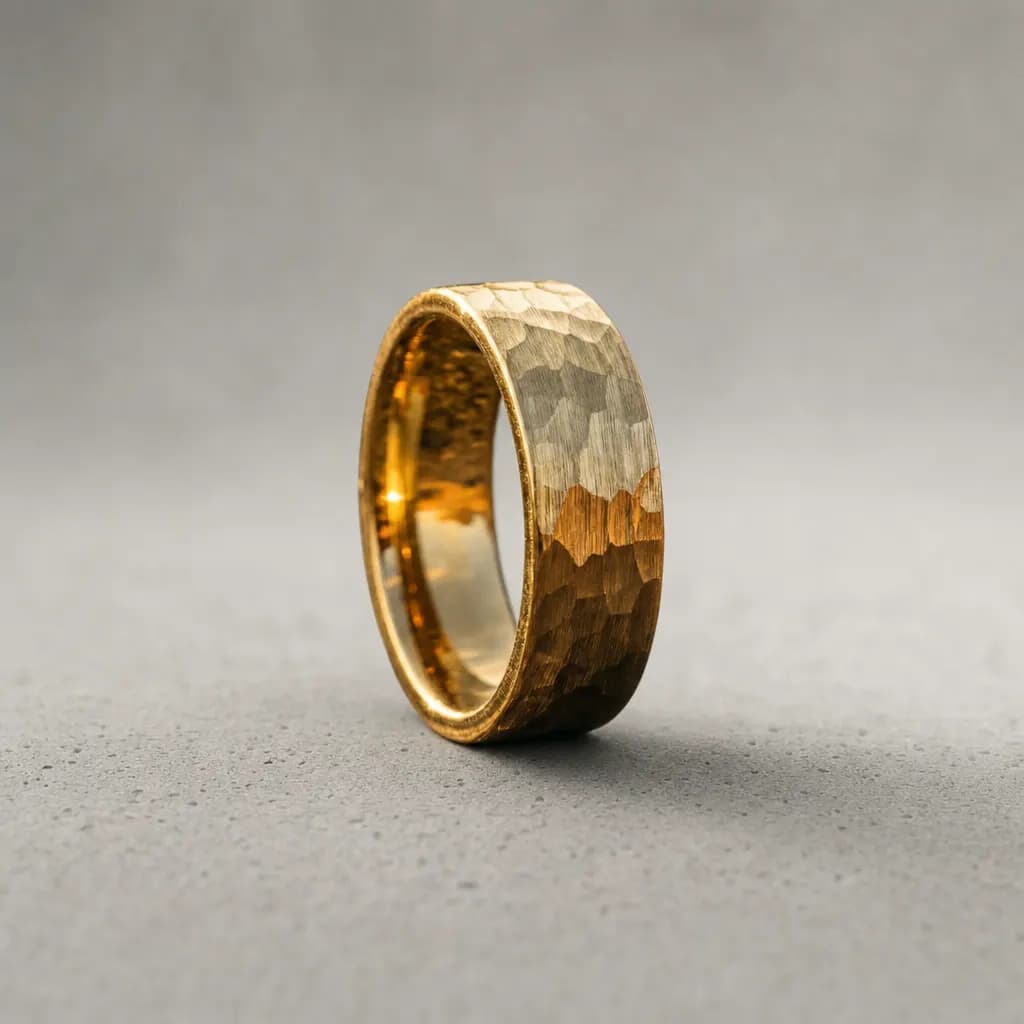
What Tungsten Carbide Actually Is, and Why It Ends Up in Wedding Bands
MBy the Maison Menashe team··6 min readMaterials & Craft
Quick answer: A tungsten carbide ring is made by sintering tungsten metal powder with a carbon-based binder, usually cobalt or nickel, under intense heat and pressure. The finished alloy lands at roughly 8 to 9 on the Mohs hardness scale, close to sapphire and well above steel, which is why it barely marks after years of daily wear. That same density is also why a tungsten carbide ring cannot be resized: bend it and it cracks rather than stretches.
Most men shopping for a wedding band want two things that pull against each other: a ring that looks substantial and one that survives a job site, a gym, or a decade of not thinking about it. Tungsten carbide answers the second half of that completely and asks something in return. Understanding what the material actually is, not just what marketing calls it, makes the trade-off easy to accept rather than something you discover the hard way.
What Is a Tungsten Carbide Ring Made Of?
A tungsten carbide ring starts as tungsten metal powder, fine enough to behave almost like flour, mixed with a small percentage of a binder metal, most often cobalt or nickel. That powder is pressed into a ring blank and heated to nearly 2,700°F in a process called sintering, where the particles fuse into a single solid without fully melting. The binder is what holds the tungsten grains together; without it, tungsten alone would be too brittle to shape into anything wearable.
The finished alloy is roughly 90 percent tungsten by weight, with the binder making up the rest. Change that ratio and you change the ring's toughness and color slightly, which is part of why finish and shade vary a little between manufacturers. This is also different from tungsten rings marketed as pure tungsten, which don't really exist as wearable jewelry: the metal on its own is too hard and too brittle to machine into a band. You'll find this alloy grouped with other durable options in our metal rings collection, alongside cobalt and titanium bands that trade some hardness for more flexibility.
Why Tungsten Carbide Rings Are So Hard to Scratch
Tungsten carbide's scratch resistance comes directly from its position on the Mohs scale, a 1-to-10 ranking of how easily a material scratches versus gets scratched. At 8 to 9, it sits just below diamond and sapphire and well above every traditional ring metal, so almost nothing you encounter day to day is hard enough to mark it.
Material
Mohs hardness
Everyday scratch resistance
Tungsten carbide
8-9
Very high
Titanium
6
Moderate
Stainless steel
5-5.5
Moderate
14k-18k gold
2.5-4
Low
Platinum
4-4.5
Low
Gold and platinum are soft enough that a wedding band in either metal picks up fine scratches within its first year of normal wear, which is why jewelers polish them out periodically. A tungsten carbide ring doesn't need that upkeep. It holds a brushed or polished finish for years because the surface simply isn't soft enough for keys, tools, or gym equipment to bite into it.
The Trade-Off: Why a Tungsten Carbide Ring Can't Be Resized
A tungsten carbide ring cannot be resized, and there's no workaround for that. Resizing any ring means physically stretching or compressing the metal, cutting it and adding material, or heating it to reshape it. Gold and platinum tolerate all three because they're soft and ductile. Tungsten carbide's hardness is a function of rigid, tightly bonded grains, and that same rigidity means the metal doesn't stretch or compress under a jeweler's tools. Push it past its limit and it fractures instead of flexing, the same reason a scratch-proof watch crystal cracks rather than dents.
This is the one honest caveat that has to sit next to every claim about durability, because the two are the same property viewed from opposite sides. The fix isn't a workaround at the ring, it's getting the sizing right before you order. Our ring sizing guide walks through how to measure at home, and if you'd rather do it with what's already in a drawer, our post on how to measure ring size at home covers the string-and-ruler method step by step. If the fit still turns out wrong after delivery, our ring replacement program covers a free replacement, up to three times, which is the actual answer to the resizing problem rather than a workaround for it.
How a Tungsten Carbide Ring Compares to Other Metals
A tungsten carbide ring trades flexibility for permanence, which is a fair swap for most men but not for every situation. Titanium and cobalt chrome sit in the middle: softer than tungsten carbide, so they can be resized within a limited range, but still far tougher than gold. Gold and platinum sit at the other end, easy to resize and refinish indefinitely, but requiring more careful handling around anything abrasive.
Weight is the other physical detail men notice. Tungsten carbide is dense, close to 40 percent heavier than an equivalent gold band, which is part of why it feels substantial on the hand rather than thin or costume-like. That density, combined with a naturally gray tone rather than a plated or coated finish, is what puts most tungsten carbide rings in our best-selling styles for men who wanted something that looked deliberate rather than delicate.
Choosing the Right Finish for a Tungsten Carbide Ring
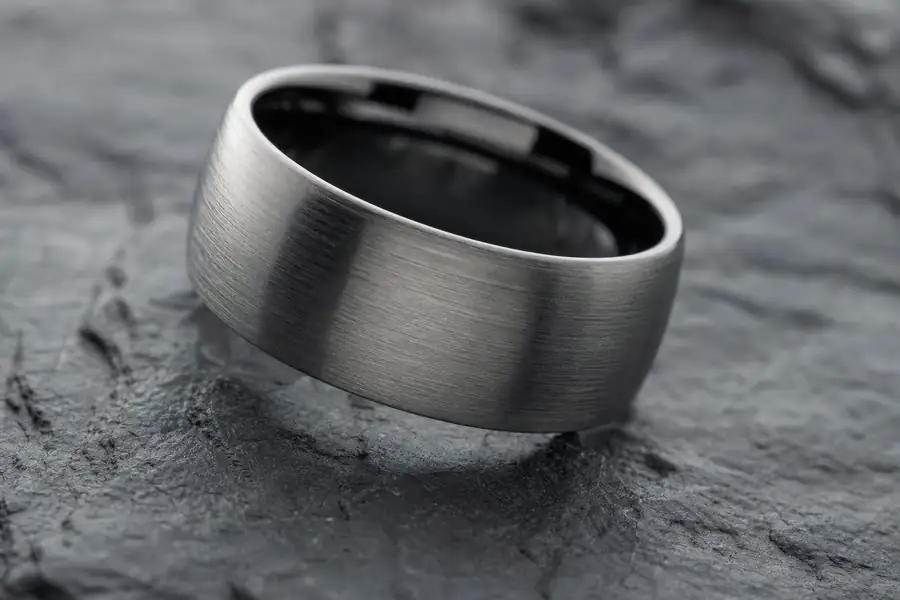
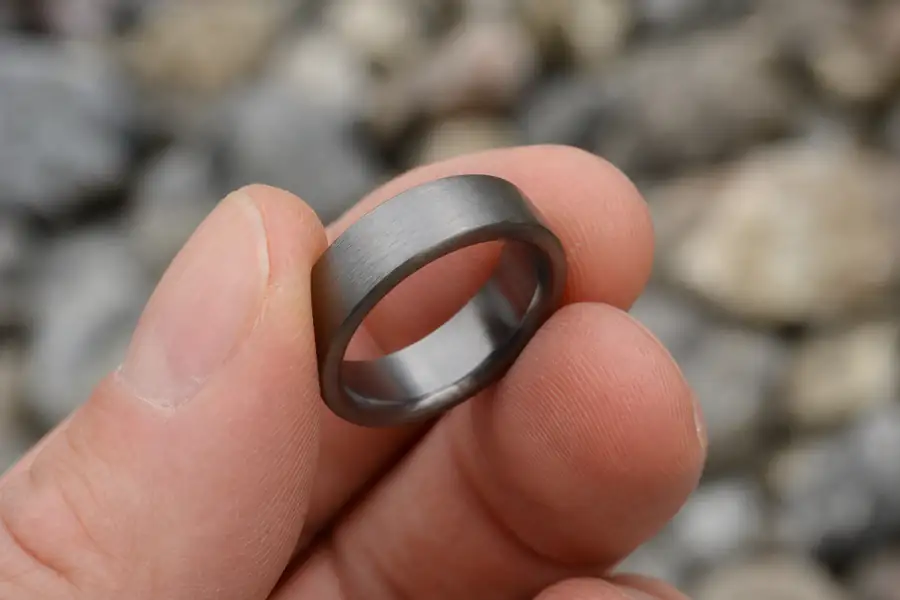
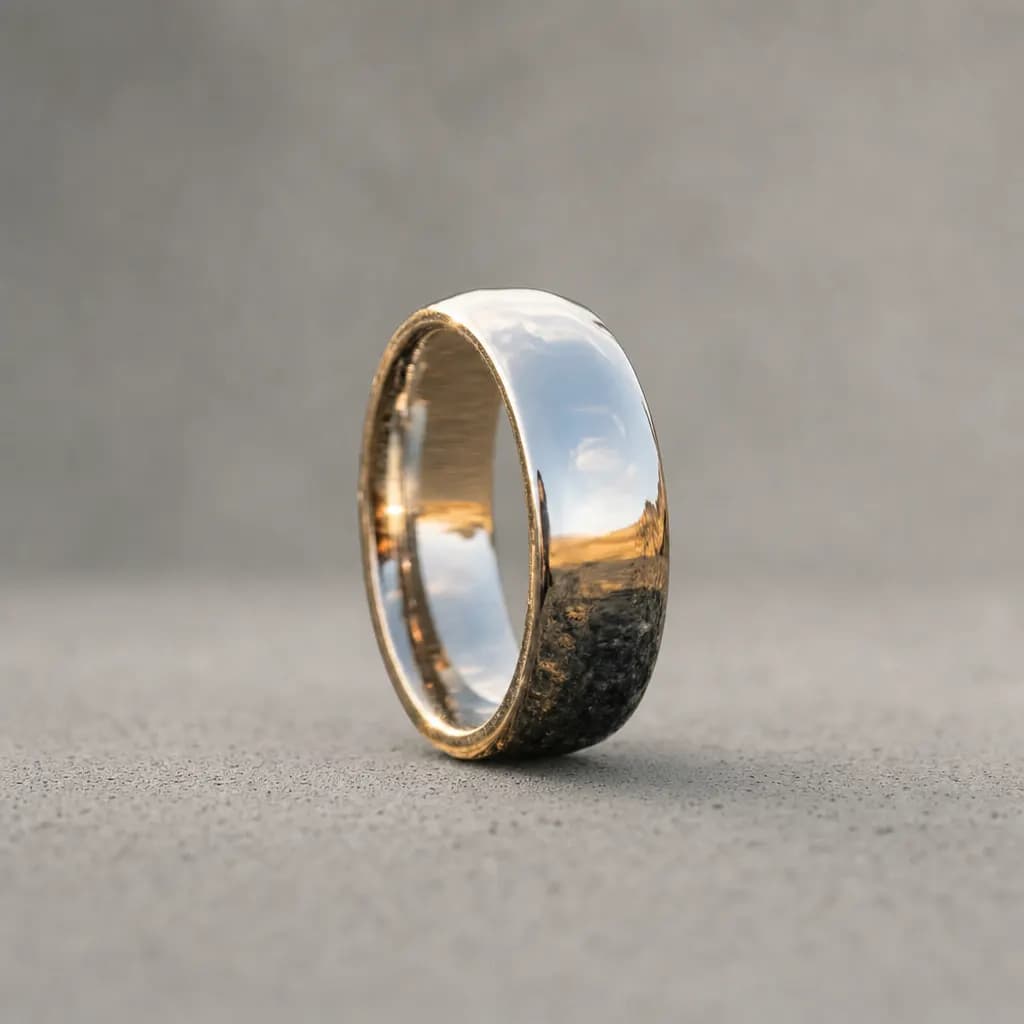
Most tungsten carbide rings come in either a high polish or a brushed matte finish, and the choice is purely cosmetic since both wear at the same rate. A polished ring reads more formal and mirrors light; a brushed one reads quieter and hides fingerprints and minor surface dust better day to day. If you want the matte look, our brushed wedding bands collection shows the range without the shine.
Neither finish needs maintenance to stay looking new. Since the surface hardness doesn't change, a brushed ring won't slowly polish itself smooth from wear, and a polished one won't dull. The only real decision is which one you'd rather see on your hand every day.
FAQs
Is tungsten carbide the same as pure tungsten?
No. Pure tungsten metal is too brittle and hard to machine into a wearable ring, so tungsten carbide rings are always an alloy of tungsten powder sintered with a binder metal like cobalt or nickel. That binder is what allows the material to be shaped and polished without shattering during manufacturing.
Can a tungsten carbide ring break or crack?
Yes, though it takes considerably more force than everyday wear. Because the metal is rigid rather than flexible, a hard direct impact, such as a heavy fall onto concrete, can cause it to crack or shatter rather than dent or bend the way a softer metal ring would.
Will a tungsten carbide ring turn my finger black or green?
No. Tungsten carbide doesn't oxidize or react with skin the way some base metals or lower-purity alloys can, so it doesn't leave discoloration. This is one advantage it holds over cheaper costume rings that use unplated brass or copper cores.
How do I know my ring size before ordering, since it can't be resized?
Measure an existing ring that fits well or your finger directly at room temperature, since fingers swell slightly in heat and shrink in cold. A simple string-and-ruler method at home is usually accurate enough, and most retailers, including Maison Menashe, offer free replacement if the size still turns out wrong after delivery.
Is tungsten carbide hypoallergenic?
Most tungsten carbide rings are considered hypoallergenic because the alloy is largely inert against skin. The small percentage of binder metal, typically cobalt or nickel, is fully bonded within the sintered structure rather than sitting on the surface, so reactions are rare compared to raw nickel jewelry.
About this guide
Written by the Maison Menashe team against the rings we actually stock. Specifications quoted here, including widths, thicknesses and materials, are taken from our own catalogue rather than from a supplier sheet.
We sell these rings, which is a bias worth knowing about when you read us. We try to earn the benefit of the doubt by stating the limitations plainly, including the ones that cost us sales: tungsten carbide cannot be resized, and a black finish is a coating that wears at the contact points over years.