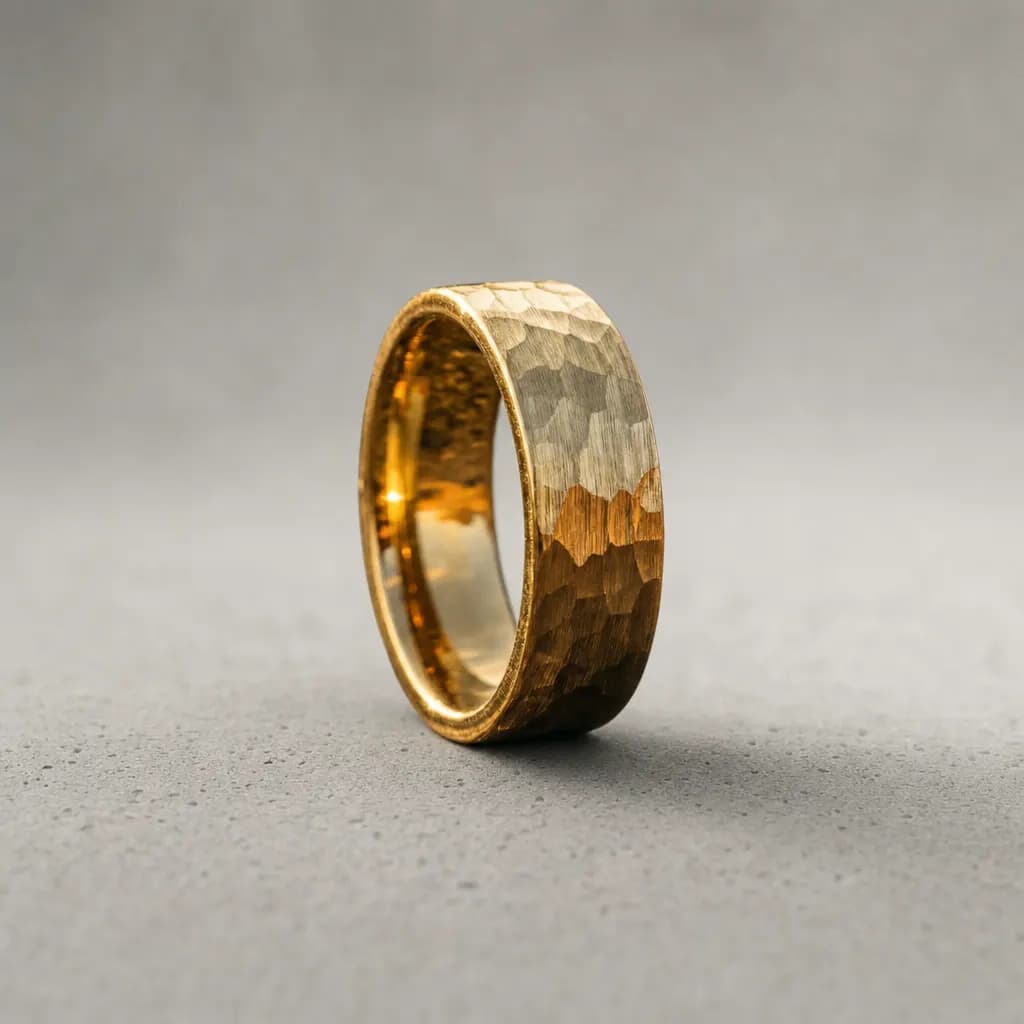
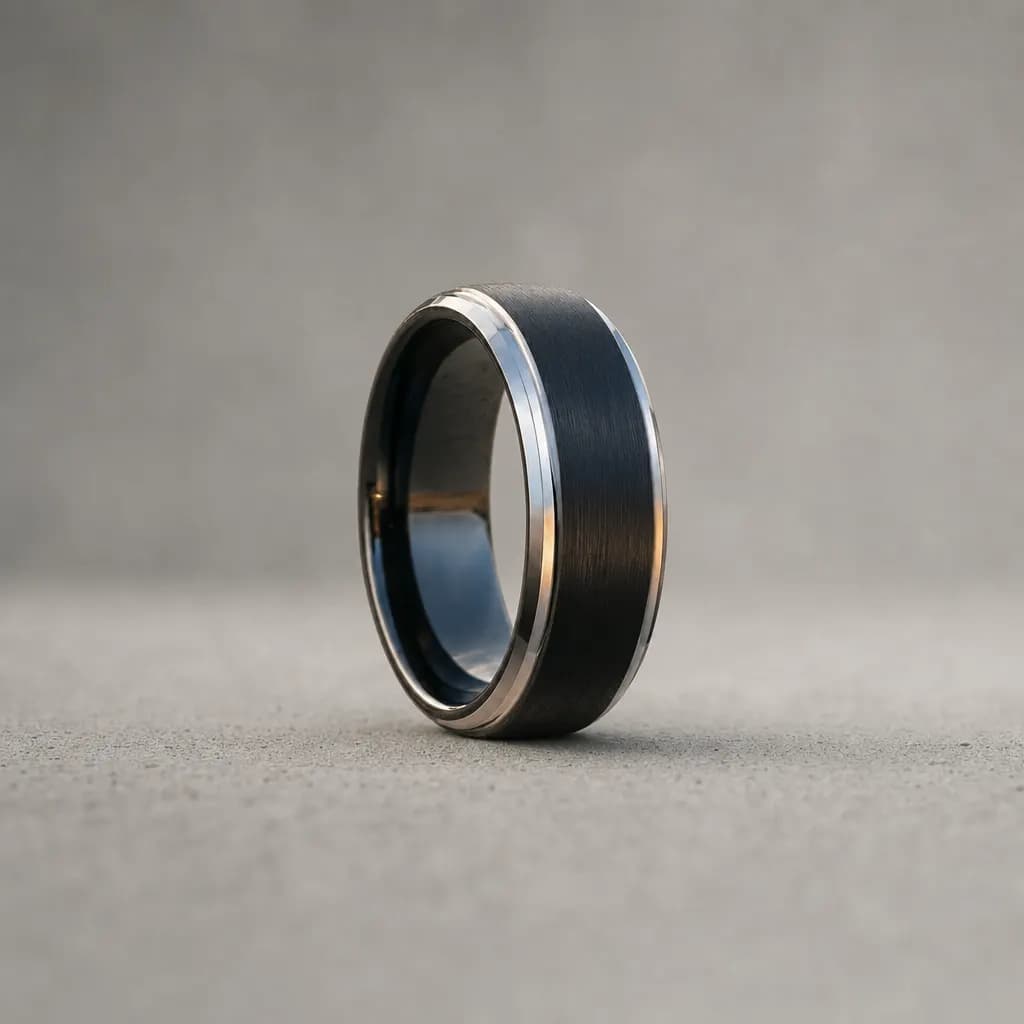
Why Tungsten Rings Cannot Be Resized, and What to Do Instead
MBy the Maison Menashe team··5 min readSizing & Fit
Quick answer: No. Tungsten carbide is too hard to stretch, cut, or solder, so once a tungsten ring is finished, its size is fixed for good. If it doesn't fit, the ring itself can't be altered. Measuring correctly before you order, and having a plan if your size changes later, are your only real options.
That's worth saying plainly, because plenty of sites bury it in fine print. Tungsten carbide holds its shape under a wrench, a hammer, or a decade of manual work, and that same rigidity is exactly what makes it impossible to resize. Knowing this before you order, not after, is what separates a ring you wear for thirty years from one that sits in a drawer.
Why Tungsten Rings Cannot Be Resized
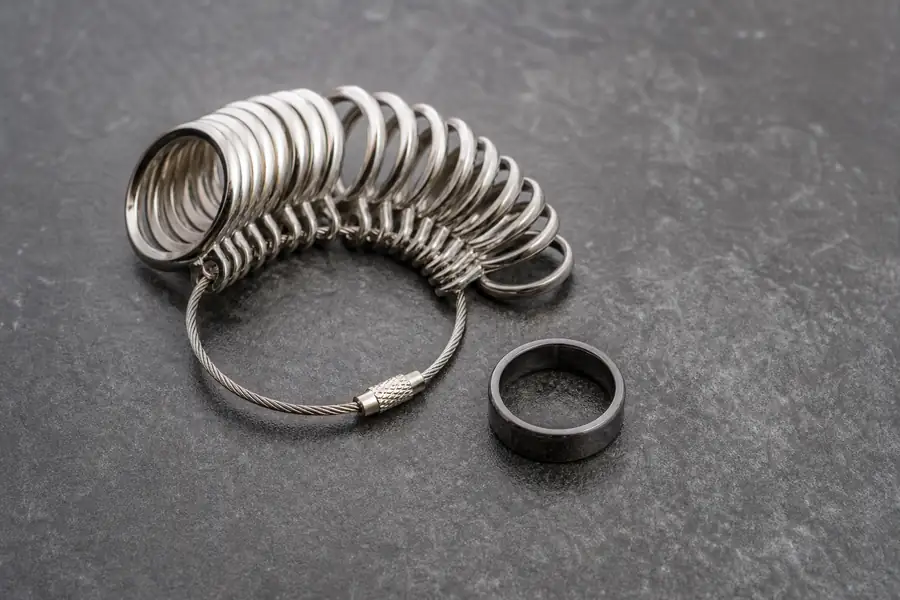
Tungsten rings cannot be resized because tungsten carbide has almost no ductility, meaning it won't bend, stretch, or compress the way gold and platinum do. Traditional resizing works by cutting a band, stretching or shrinking it on a mandrel, and soldering the seam shut. That process depends on a metal soft enough to reshape without breaking.
Gold and platinum are malleable enough to take that kind of handling. Tungsten carbide is a sintered compound of tungsten and carbon, closer in hardness to a machine tool than to a precious metal, and a jeweler's torch won't touch it. Push it past its size and it doesn't give. It cracks, cleanly and without warning, because the same hardness that resists scratches on your wedding band also removes the flexibility a jeweler needs to adjust it.
How to Measure Your Finger Correctly First
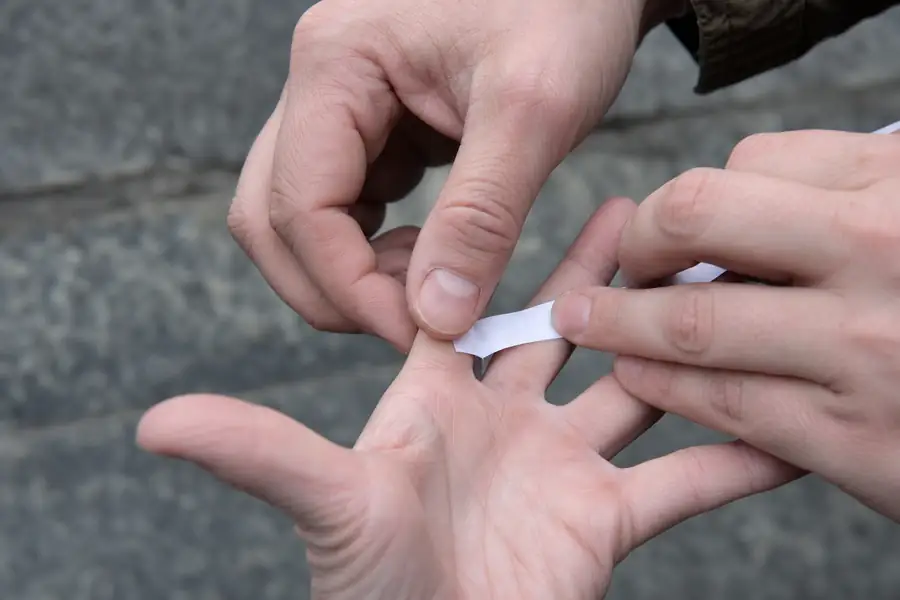
Getting your size right before you order is the single biggest factor in whether a tungsten ring fits you for life. Fingers change slightly with temperature and time of day, so measure in the evening when your hands are at their normal size, not right after a workout or in cold weather when fingers run smaller.
Our post on how to measure ring size at home walks through the string and printable-strip methods step by step, and it takes about five minutes. If you'd rather not guess, our ring sizing guide includes a free printable sizer and a walkthrough of how tungsten bands should fit: snug enough that it takes a bit of resistance to pass the knuckle, but not so tight it leaves a mark.
Width matters too. An 8mm band sits differently on the finger than a 6mm one, so if you're between sizes, going up a half size is usually the safer call on a wider ring.
What Happens If Your Tungsten Ring Doesn't Fit
If a tungsten ring arrives too loose or too tight, the fix isn't alteration, it's replacement. That sounds inconvenient, but it's a straightforward swap rather than a repair job, and most of our styles ship in a full range of sizes so a correct-size replacement is usually just a reorder away.
This is also why we don't recommend buying a tungsten band as a surprise gift without a confirmed size. A ring that's a quarter size off won't loosen up with wear the way a soft metal might. It will feel exactly the same on day one and day one thousand.
What the Ring Replacement Program Covers
Our ring replacement program replaces your ring free, up to three times, if it's lost, broken, or the wrong size. That covers the two scenarios tungsten rings can't handle on their own: a finger that changes size over the years, and a size that was measured wrong the first time.
We built the program this way because tungsten's biggest strength, its refusal to bend or scratch, is also its one limitation. Rather than pretend that trade-off doesn't exist, we'd rather absorb the cost of getting it right. If your knuckles change after an injury, weight change, or just age, you're not stuck. You reorder in the new size, and the old ring is replaced.
Caring for a Tungsten Wedding Band
A correctly sized tungsten band needs almost no maintenance, which is part of the appeal. It won't scratch from tools, keys, or gym equipment, and it holds its polish or brushed finish for years without replating.
The one thing to watch is impact, not wear. Tungsten carbide resists scratching but is brittle under a sharp, direct blow, the kind you'd get slamming a car door on your hand or a fall onto concrete. That's rare, and most men wear tungsten daily through manual work without issue, but it's the honest caveat that comes with the hardness. If you want to browse styles built for daily wear, our best-selling wedding bands are the ones we see hold up best across trades and gyms alike.
FAQs
Can a tungsten ring be resized even a little bit?
No, not even a quarter size. Tungsten carbide has no give at all, so a jeweler cannot stretch, compress, or solder it without cracking the ring. Any size change means ordering a new ring in the correct size.
What if my finger size changes after I buy a tungsten ring?
You're covered under the free replacement program, which replaces your ring up to three times if it no longer fits, breaks, or was the wrong size to begin with. You simply reorder in your new size and send back the old ring.
Is it better to size up or down with tungsten?
If you're between two sizes, most jewelers, us included, recommend sizing up slightly rather than down. A ring that's a touch loose is more comfortable long term than one that's tight enough to trap the finger or leave marks.
How accurate do I need to be when measuring at home?
Very accurate, since there's no room to correct a mistake later without a full replacement. Measure in the evening, avoid cold hands, and use a proper printable sizer or string method rather than an old ring that may not be a true fit.
About this guide
Written by the Maison Menashe team against the rings we actually stock. Specifications quoted here, including widths, thicknesses and materials, are taken from our own catalogue rather than from a supplier sheet.
We sell these rings, which is a bias worth knowing about when you read us. We try to earn the benefit of the doubt by stating the limitations plainly, including the ones that cost us sales: tungsten carbide cannot be resized, and a black finish is a coating that wears at the contact points over years.