Koa Wedding Rings: Grain, Color and Why No Two Match
MBy the Maison Menashe team··6 min readMaterials & Craft
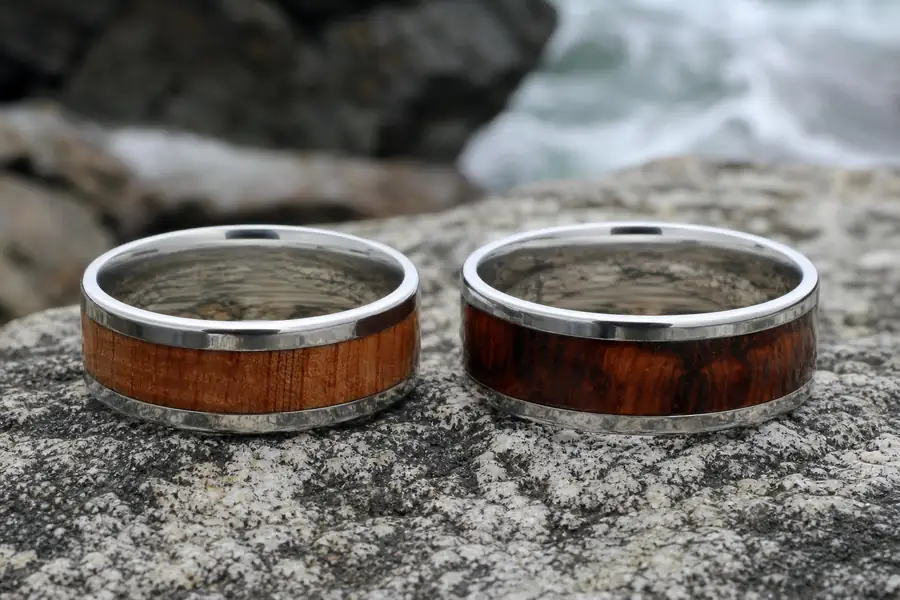
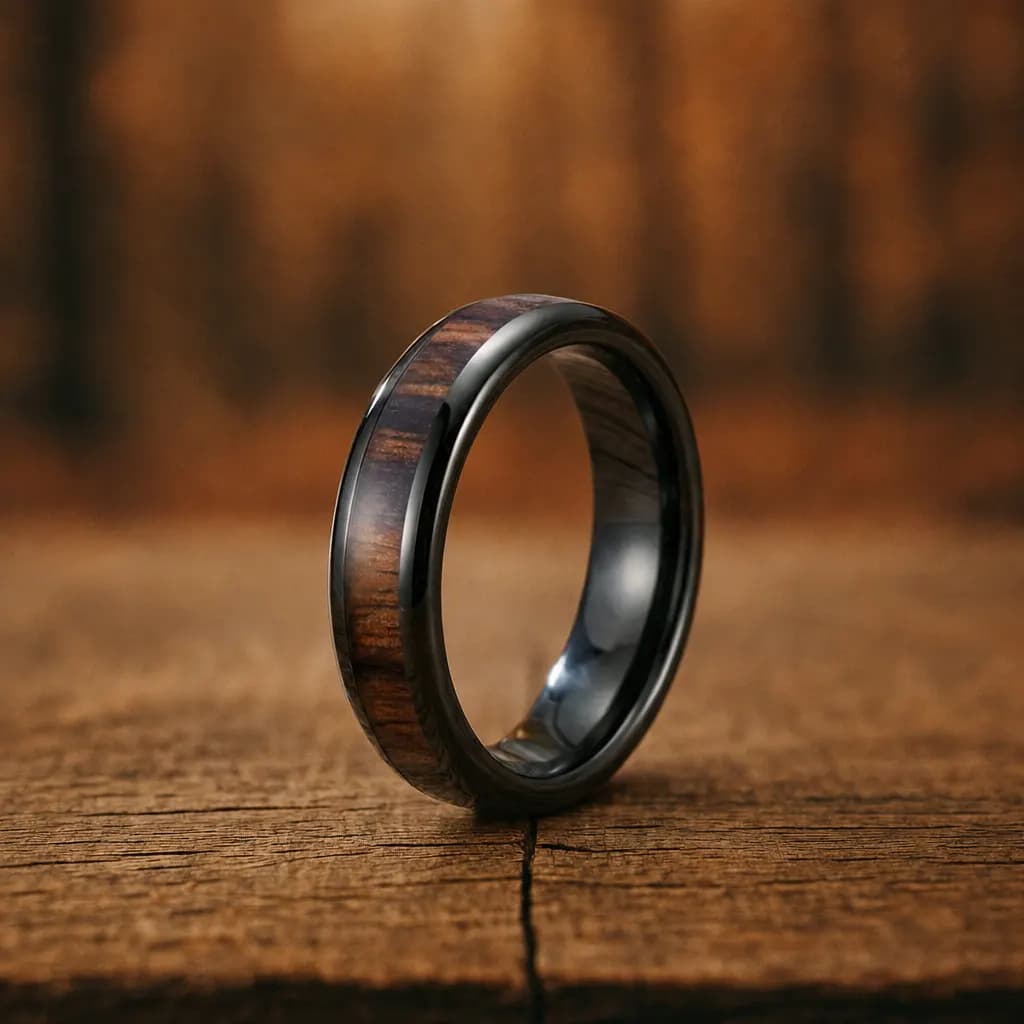
Koa is one of the only hardwoods that can look completely different from one ring to the next and still be unmistakably itself. Grown only in the Hawaiian islands, it swings from pale honey to near-black chocolate inside the same board, sometimes inside the same ring. If you are comparing koa wedding rings online and wondering why two listings for the same style show different colored photos, the wood is the reason, not a mistake in the photo.
Koa is a Hawaiian hardwood ranging from honey blond to deep chocolate brown.
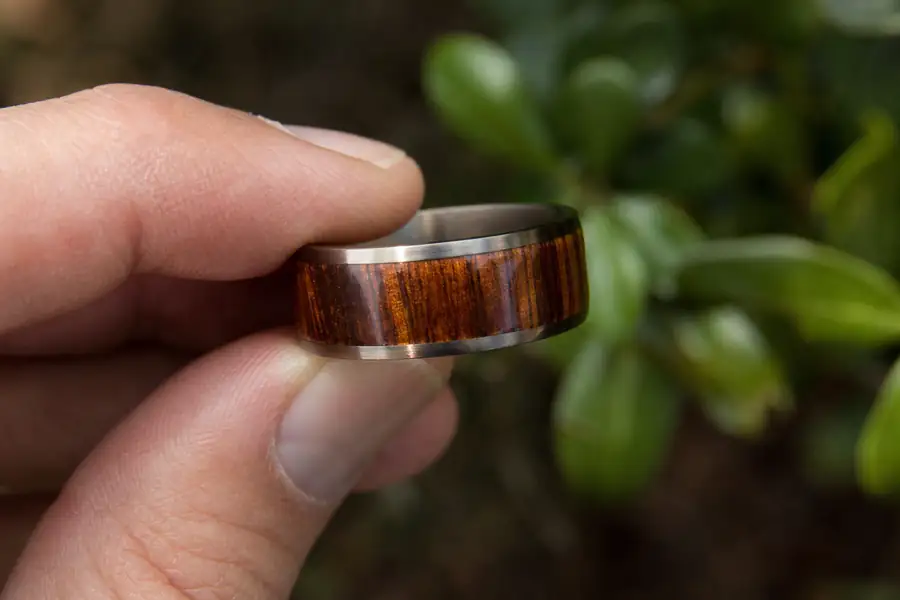
Grain and color depend on the tree, the cut, and where in the trunk the ring came from, so no two koa wedding rings are identical.
The wood darkens slightly over months of wear as skin oils and light interact with it.
Koa alone is too soft for daily wear, so it is bonded over a harder core for strength.
Wood rings cannot be resized once cut and bonded, so accurate sizing matters before you order.
What Makes Koa Wedding Rings Different From Other Wood Bands
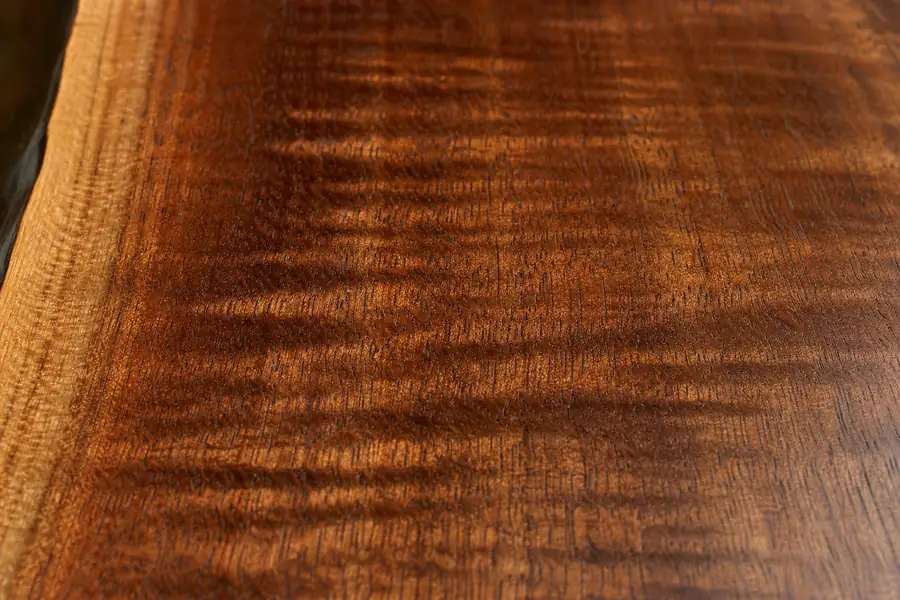
Koa (Acacia koa) is a hardwood that grows only in Hawaii, used for centuries in canoe hulls and furniture because of its tight, interlocking grain and unusual color range. A hardwood is simply timber from a broadleaf tree, denser and slower-growing than a softwood like pine, which is part of why koa holds a sharp edge and a fine polish. Within a single koa log you can find blond sections near pale honey sitting a few inches from streaks of deep chocolate, and ring makers cut across that range rather than sorting it out.
That is different from a wood like walnut or maple, which tends to stay a fairly consistent shade across a batch. You can see the spread across species in the wooden rings collection, where koa sits alongside darker and lighter timbers, but koa is the one where a single tree can produce both ends of the color scale.
Why No Two Koa Wedding Rings Match
No two koa wedding rings match because the grain figure, the color, and the density all shift depending on exactly where in the tree the wood was cut. Curl and fiddleback figure, the wavy, shimmering grain pattern some koa boards show, form from stress in the growing tree and cannot be predicted or repeated. Heartwood near the center of the trunk tends to run darker and denser than sapwood near the bark, so two rings cut a few inches apart can look like different species.
That unevenness is the point rather than a flaw to correct. It is exactly what the Nature's Elegance collection is built around: materials where the imperfections are the design, not something a factory sands away for consistency. A koa ring bought off a rack will never look machine-matched to the one next to it, and that is what separates it from a metal band finished to a uniform spec.
How Koa Wedding Rings Change Color With Wear
Koa wedding rings darken slightly over months of daily wear, deepening from their original tone toward a richer, warmer brown. Skin oils soak into the wood grain and ambient light oxidizes the surface, the same slow process that darkens a wooden gun stock or a well-played guitar top over years of handling. The shift is subtle, usually a shade or two, not a dramatic color change.
This is not damage and it does not need to be treated. A ring that looked pale honey on day one will typically settle into a slightly deeper, more even tone by year one, and most men find they prefer it that way. If you want the ring to stay closer to its original shade for longer, keeping it out of direct sun and away from harsh chemicals slows the process, but it will not stop it entirely.
What Holds a Koa Wedding Ring Together
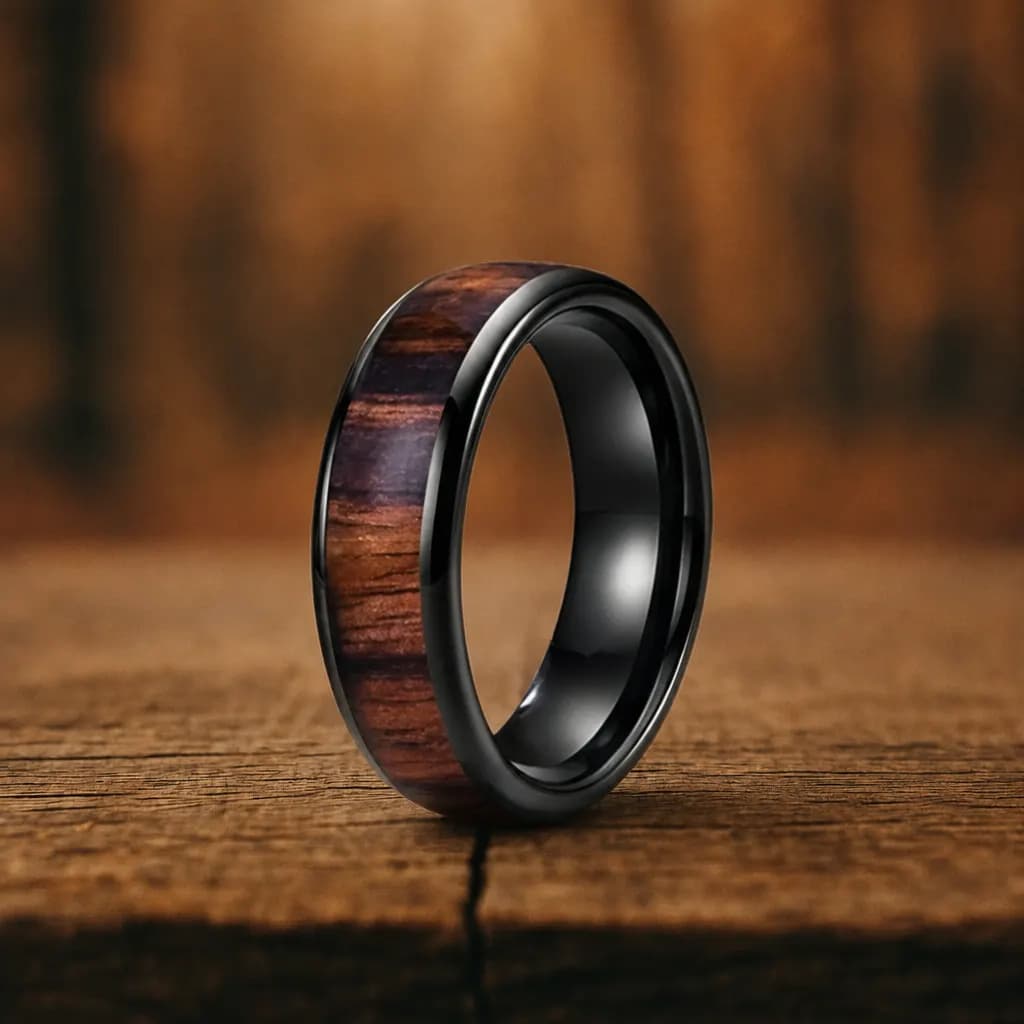
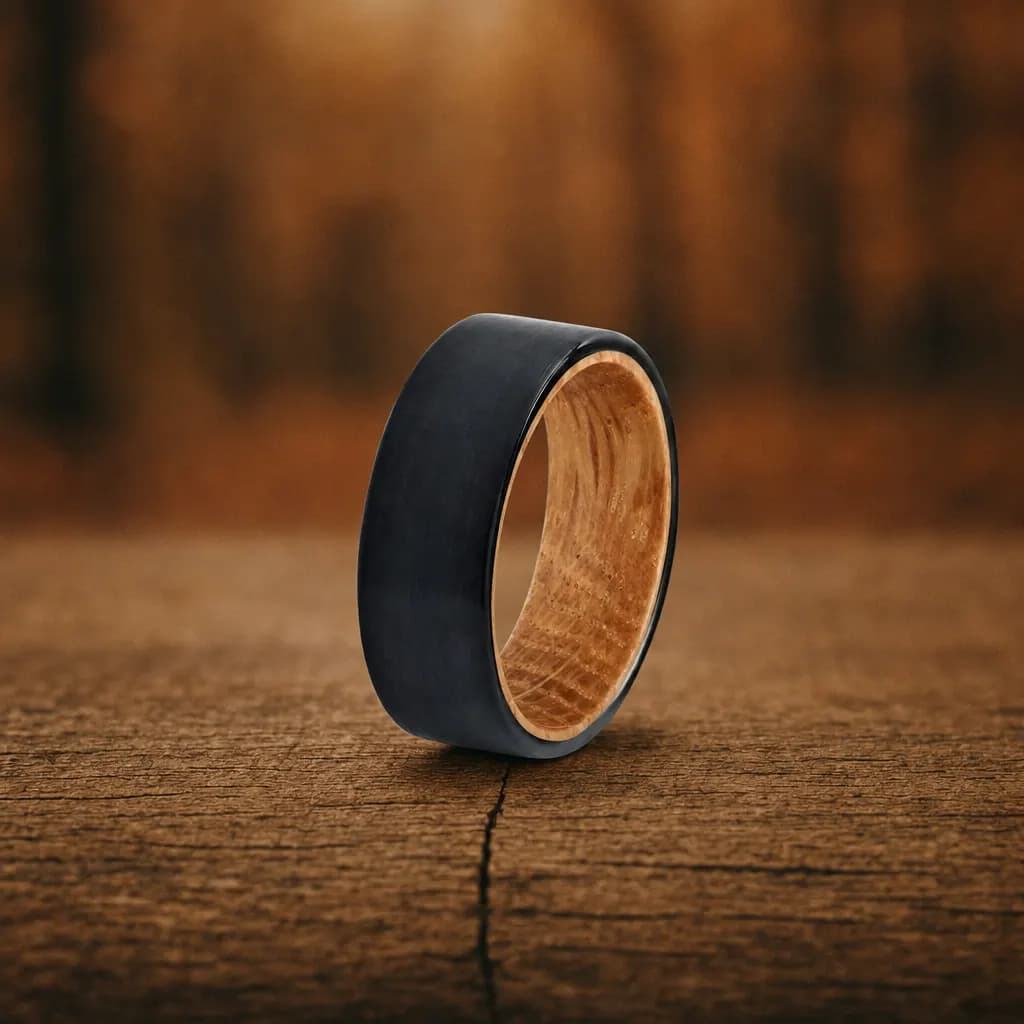
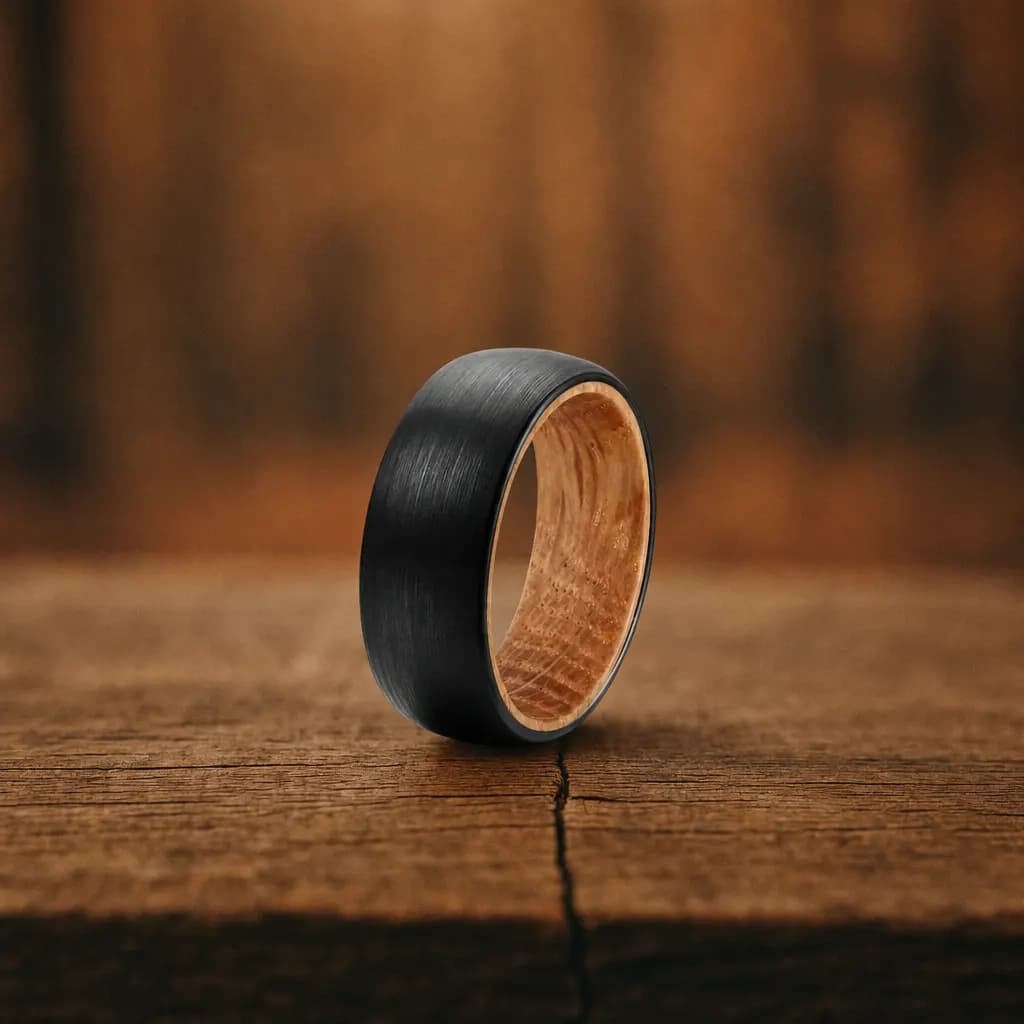
A koa wedding ring is a thin sleeve of real koa wood bonded over a harder core, because koa alone is too soft to survive daily knocks, water, and pressure without chipping. The core carries the structural load; the koa provides the color and grain you actually see and touch. This construction is why the ring can look like solid wood while standing up to a job site or a gym bag.
It is also why koa rings, like most bonded wood bands, cannot be resized once they are finished. The wood sleeve is cut and fitted to a specific diameter, and reworking it risks cracking the grain. Getting your size right before you order matters more here than with a stretchable metal band, and our guide on how to measure ring size at home walks through it in a few minutes with string or a strip of paper. If a ring still arrives too tight, too loose, gets lost, or breaks, the ring replacement program replaces it free, up to three times, which is the honest backstop for a material that cannot simply be resized on the spot.
Choosing and Sizing a Koa Wedding Ring
The safest way to choose a koa wedding ring is to size it slightly loose rather than slightly tight, since wood does not stretch or compress the way metal can with wear over the years. Measure in the evening when your fingers run largest, and account for temperature: cold hands measure smaller than they will feel in summer.
Our full ring sizing guide covers band width, knuckle size, and how to read a printable sizer correctly, which matters more for a ring you cannot adjust later. Beyond sizing, expect some natural variation between the ring you receive and any single reference photo. That variation is not a defect. It is the entire reason to choose koa over a wood or metal that looks the same in every listing.
FAQs
Can koa wedding rings be resized?
No. Koa is bonded as a thin wood sleeve over a harder core, and cutting or stretching that sleeve after the fact risks cracking the grain. Get your measurement right before ordering using a printable sizer or a jeweler's sizing ring.
Will my koa ring look exactly like the photo online?
Not exactly, and that is expected with real koa. Grain figure and color shift from tree to tree and even within a single trunk, so your ring will show its own honey-to-chocolate pattern rather than an identical match to a product photo.
Is koa wood durable enough for daily wear?
On its own, koa is too soft for constant daily wear, so it is bonded over a harder metal core that carries the structural load. The koa layer provides the look and grain while the core handles impact and pressure.
Why does my koa ring look darker than when I bought it?
Koa naturally deepens in color over months of wear as skin oils and ambient light interact with the wood surface. This is normal aging, similar to how a wooden gun stock or guitar top darkens with handling, and it usually settles within the first year.
How do I take care of a koa wedding ring?
Keep it away from harsh chemicals, prolonged water exposure, and direct sunlight for long stretches, since all three can dry out or fade the wood faster. A soft cloth wipe after wear and occasional wood-safe oil are usually enough to keep the grain looking its best.
About this guide
Written by the Maison Menashe team against the rings we actually stock. Specifications quoted here, including widths, thicknesses and materials, are taken from our own catalogue rather than from a supplier sheet.
We sell these rings, which is a bias worth knowing about when you read us. We try to earn the benefit of the doubt by stating the limitations plainly, including the ones that cost us sales: tungsten carbide cannot be resized, and a black finish is a coating that wears at the contact points over years.